
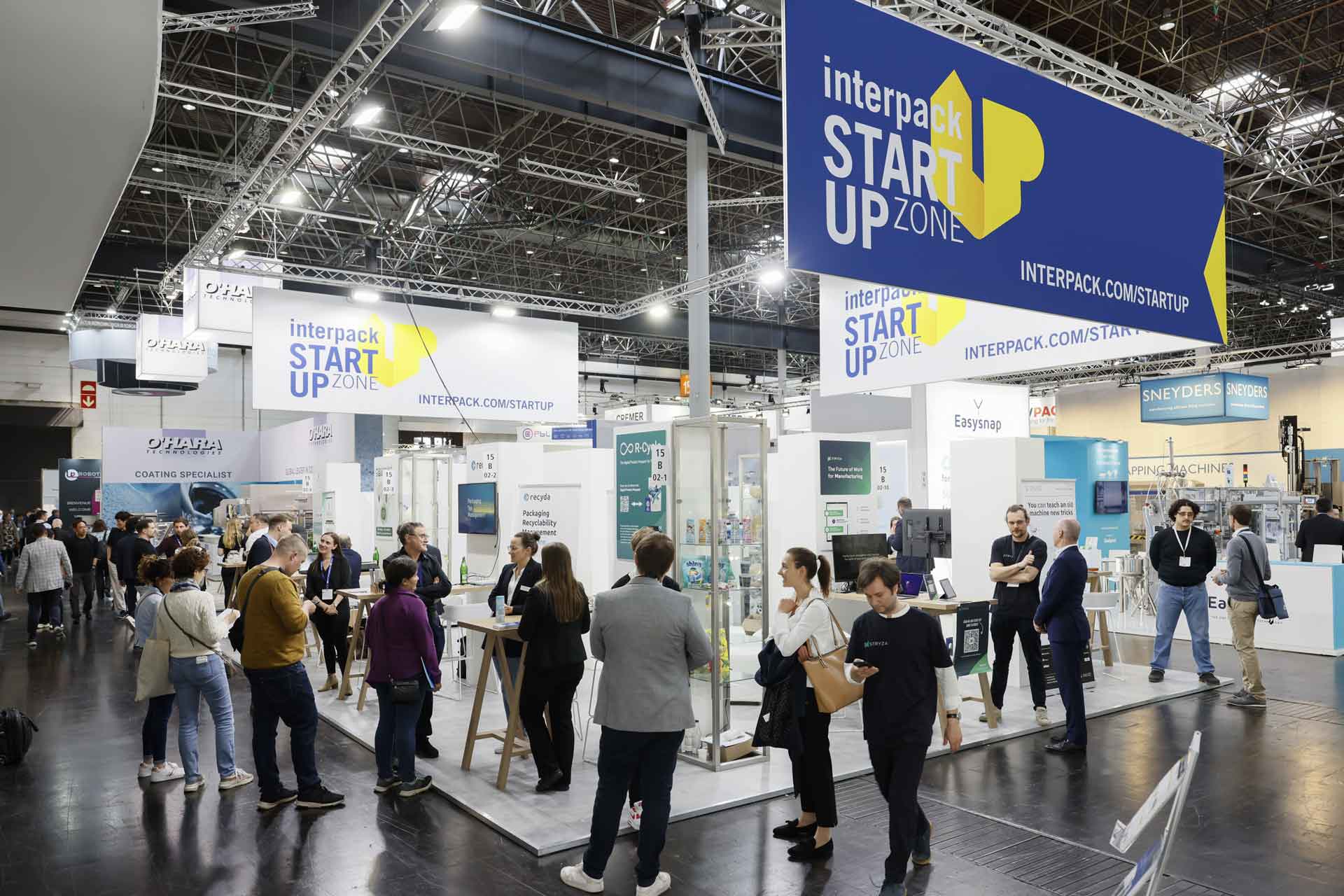
BREITNER exhibition stand
interpack 2026 at Düsseldorf

What makes BREITNER special?
Setting up, filling & sealing.
The process chain covered by the systems ranges from the placement of bottles delivered as bulk goods to the core process of filling and the sealing of the containers. BREITNER systems can process everything from the smallest 30 ml bottles to large 30 litre canisters – a range of one to a thousand.
Low-viscosity products such as vinegar or solvents are dosed in filling machines with inductive flow measurement or mass flow measurement, while classic piston dosing machines are used for high-viscosity products such as creams or pastes.
read more …
For high throughput rates of up to 300 containers per minute, BREITNER offers rotary filling machines and rotary capping machines which, depending on the configuration, can process up to 30 containers simultaneously.
The product range has a particular technological strength when it comes to filling cleaning agents into bottles with pump caps and riser tubes (trigger pumps). These liquids tend to foam; they are filled using precisely controlled below-level filling so that no foam is produced. During capping, the thin – and, due to the manufacturing process, curved – riser pipe is threaded into the narrow bottle neck with the utmost precision and at high speed, and the pump cap is then screwed on with a knurled drive.
For highly flammable substances such as pesticides, disinfectants or cleaning fluids, the systems are equipped in accordance with explosion protection standards.
For cleaning purposes, the filling machines are equipped with Cleaning in Place (CIP) technology throughout. Nothing needs to be dismantled or unscrewed: instead of the product, cleaning or rinsing fluid runs through the machine and covers the entire product path from the inlet to the tip of the filling pipe. All details of the machine, such as pipe transitions, hose connections, etc., are designed for this seamless cleaning. Even in piston filling machines, the technically unavoidable dead spaces behind the dosing piston, where small amounts of product residue may remain, are cleaned by the cleaning agent (piston dead space rinsing). If the cleanliness requirements are even higher, sterilisation in place (SIP) is applied according to the same principle.
There is still room for improvement in terms of cleanliness during the filling process itself: for perishable foods such as freshly squeezed fruit juices, the requirements for low bacterial contamination are so high that laminar airflow technology is used to ‘wash around’ the short distance between the filling pipe outlet and the liquid level with a stream of sterilised air.
The customers of this medium-sized company come mainly from four industries.
In the food industry (link to food landing page), these include vinegar and oil, juices, but also viscous products such as jam and honey, creams, marmalade or mustard, ketchup or mayonnaise.
In the chemical industry (link to the chemicals landing page), the machines are used for packaging cleaning agents and dishwashing detergents, as well as motor oil, car care products, windscreen cleaner, brake fluid, radiator antifreeze, paints and varnishes, adhesives – even superglue – plant protection products and liquid fertilisers for the home and garden. Particularly relevant at the moment: disinfectants.
In the cosmetics sector (link to cosmetics landing page), BREITNER’s customers include manufacturers of shampoo, shower gel, liquid soap, massage oil, nail polish remover, facial toner, hair tonic, sunscreen and baby oil.
In the non-sterile pharmaceutical industry and for medical products (link to the pharmaceuticals landing page), disinfectants and remedies such as cough syrup and nasal spray are filled using the manufacturer’s systems.
These industries, with their wide variety of products, have always challenged the manufacturer’s engineers in the past, with the result that today’s range of machines is extremely versatile and can even be used for surprising new applications. Strengths developed in one industry are thus brought to bear in another industry with its completely different products. One example: since cosmetics manufacturers have stopped using preservatives, the same standards are applied to cleaning as to food.
The BREITNER family business: it was founded in 1961 by the grandfather of the current management; the father built the company up to its current size, and so it has been exclusively in the hands and under the management of the family for over 60 years. Today, under the leadership of the third generation, the fourth is already growing up. Together with the longevity of the machines, this continuity ensures that the company’s customers can still obtain spare parts and service for their machine inventory even after decades.
BREITNER has around 100 employees and is based in Schwäbisch Hall, in the heart of Packaging Valley, an association of around 100 companies in the packaging industry that have joined forces on a regional basis and see themselves as the Silicon Valley of the packaging industry in Germany.
Contact persons
Your packaging machine specialists
at interpack 2026
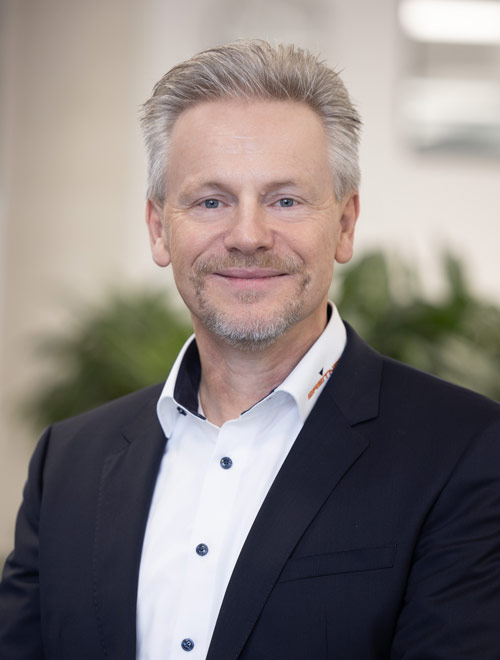
Volker Breitner
CEO
+49 791 95035-0
management@breitner.de
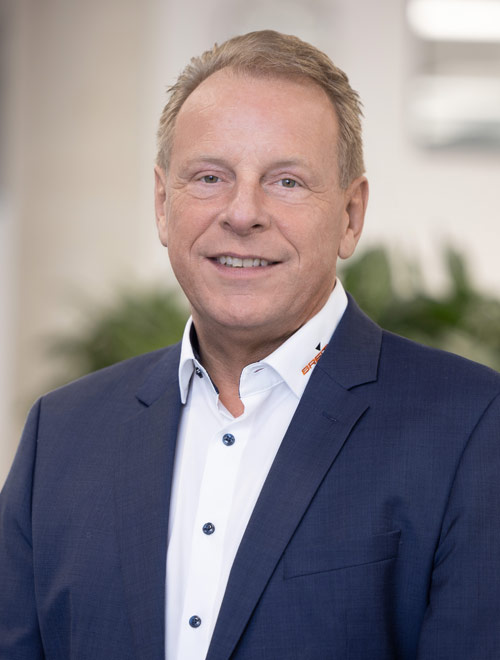
Achim Breitner
Managing director
+49 791 95035-0
management@breitner.de
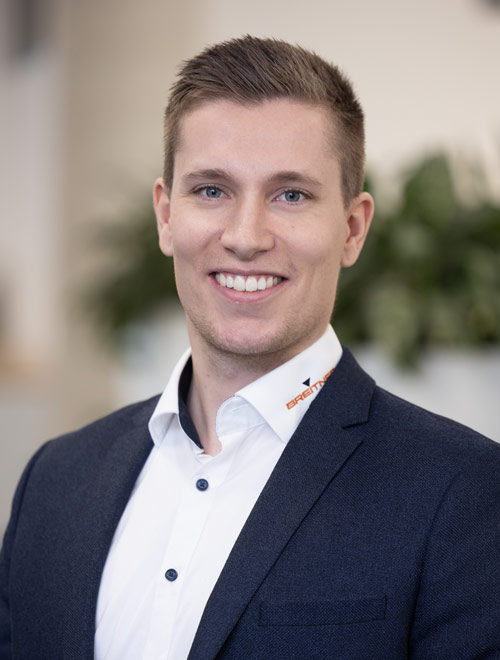
Christian Baumann
Sales & Marketing
+49 791 95035-0
sales@breitner.de
Eberhard Horlacher
Sales
+49 791 95035-0
sales@breitner.de
Klaus von Hippel
Sales
+49 791 95035-0
sales@breitner.de
Our customers
say about us …


